Brands survive disruption by pivoting before their existing model fully stops working. In May 2025, Weight Watchers filed for Chapter 11 bankruptcy to restructure more than $1bn in debt as GLP-1 drugs transformed the weight-loss market. But rather than simply signalling decline, the filing reflected a company attempting another major strategic pivot, following a decades-long pattern of adapting in response to changing customer behaviour.
The real challenge for brands is not disruption itself, but recognising when customer behaviour has changed enough to make the old model irrelevant. And being bold enough to shift their model in response.
Weight Watchers survived multiple waves of disruption because it repeatedly recognised when customers were redefining the health and wellbeing category.
For decades, Weight Watchers built its model around the belief that long-term weight loss is driven by consistency and accountability. Points systems, community support and coaching mechanisms were all designed to help customers build better habits over time.
As consumer attitudes shifted fundamentally, so did the brand.
In the late 2000s and early 2010s, customers began moving away from rigid, guilt-driven dieting culture towards a broader definition of health centred around wellbeing, balance and sustainability. Weight Watchers responded by redesigning its programme around nutritional quality and satiety through PointsPlus, then later broadened success metrics beyond weight loss alone with their “Beyond the Scale” program.
As body positivity and anti-diet culture reshaped the category, the business softened its messaging around restriction and rapid transformation, eventually rebranding to “WW” in 2018. At the same time, it invested in apps, food tracking, digital coaching and virtual communities as health behaviours became increasingly digital and always-on.
Rather than resisting these significant customer behaviour shifts, Weight Watchers consistently treated them as opportunities to evolve its offering and remain relevant.
Almost overnight, GLP-1 medications changed the market again. Drugs like Ozempic offer faster, more convenient, more predictable results. Adoption has accelerated rapidly, with Morgan Stanley estimating the global GLP-1 market could reach $105bn by 2030.
GLP-1 medications reframed weight loss itself. The need didn’t disappear, but the route to achieving it changed. Consumers had historically seen weight loss as a behavioural challenge, but increasingly they see it as medical.
For a company built around coaching and habit formation, this represented a major shift in customer expectations. But importantly, Weight Watchers did not ignore it.
Weight Watchers now offers GLP-1 medications through its clinical platform, combining them with coaching, nutrition and behavioural support. Early results have shown this integrated approach outperforms medication alone.
It has also partnered with Amazon Pharmacy to improve access, enabling faster delivery and better availability.
Weight Watchers’ continuous adaptability is likely the only reason it is still alive today. It recognised that the category was changing underneath it and attempted to evolve before becoming completely irrelevant.
Other brands have successfully adapted.
Netflix, for example, began as a DVD-by-mail business. But as consumer behaviour shifted towards instant, on-demand access, it pivoted aggressively into streaming, despite knowing it would cannibalise its original model. Later, it adapted again by investing heavily in original content as viewing habits and the competitive landscape evolved.
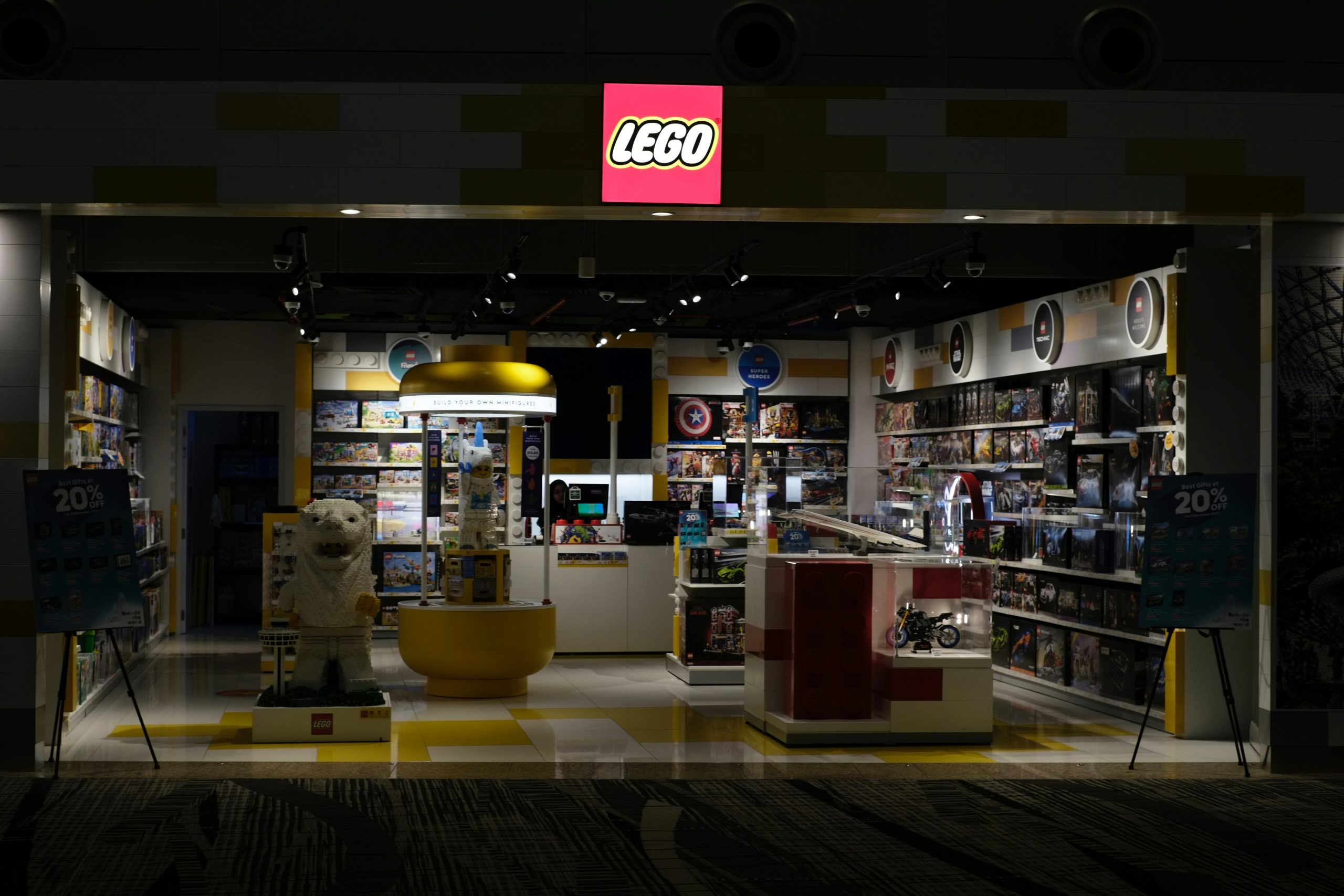
In the early 2000s, Lego faced declining relevance as children increasingly shifted towards digital entertainment and gaming. Rather than protecting its traditional model, the company expanded into digital experiences, gaming and entertainment franchises while reinforcing the core creativity of the brand. The business adapted without abandoning its underlying purpose.
Blockbuster is one of the clearest examples of a business that failed to adapt. It dominated home entertainment for years, but underestimated how quickly consumer behaviour would shift towards streaming and convenience. Even after having the opportunity to acquire Netflix for a mere $50 million in its early days, Blockbuster remained heavily tied to its physical retail model and late-fee economics. As customer expectations changed, the business became increasingly misaligned with how people wanted to consume entertainment.
Similarly, BlackBerry dominated the early smartphone market by optimising for secure email, physical keyboards and enterprise communication. But as smartphones evolved into lifestyle and entertainment ecosystems, customer expectations shifted towards apps, touchscreens and richer user experiences. BlackBerry continued refining the old model while competitors redefined what consumers actually valued from a smartphone.
The common thread is companies becoming too attached to how customers behaved yesterday, instead of building a real understanding of the customers they serve today, and the ones they will need to serve tomorrow.
Consumer behaviour shifts often look small at first. A niche behaviour. A new technology. A changing expectation. But they can signal that the category is starting to reset underneath you.
The businesses most likely to survive these shifts are the ones bold enough to challenge their model early. In practice, that means asking difficult questions continuously:
The more difficult challenge is whether brands are willing to question the assumptions behind today’s model while it is still working. Because by the time those assumptions visibly break, the market has often already moved on.
So, what could make your customers stop needing you in your current form?
If you’d like to talk through where your growth strategy might be exposed to shifts like this, we would love to hear from you. Get in touch.


© 2026 Manifesto Growth Architects Manifesto Growth Limited, is a company registered in England and Wales with a registered office at 36-38 Hatton Garden, London, EC1N8EB.




 Find us on Instagram
 Follow us on LinkedIn