Last Saturday, I found myself in a heavily trodden field with roughly 60,000 other festival goers watching Charli XCX in her signature sunglasses stomping around Glastonbury’s ‘Other Stage’. Her acidic, bassy sound resonated through the crowd like electricity. I was awe-struck for about 75 minutes.
The whole weekend was amazing, definitely worth the ticket price. If you’ve seen clips online of Snow Patrol’s emotional ‘Chasing Cars’, or Doechii’s brilliant hip-hop set (with enough costume changes to put Elton’s wardrobe to shame), you’ll be able to tell what an atmosphere there was in the crowd. I almost pulled a hamstring dancing with strangers to Ezra Collective’s contemporary jazz tunes that were both funky and delightful. Each performer was totally different from one another. A buffet of delicious sounds.
However, 7 months ago when I purchased my ticket for Glastonbury Festival, I had no idea who would be on the line up. Neither did the other 2.5 million people who were vying for a place. I got lucky; looking at the odds, there was only an 8.4% chance of securing a Glasto ticket this year. So what then is it about this particular festival which means that so many people are willing to part with (a not-insignificant wodge of) cash to attend, despite not knowing who will be performing?
I think there are a number of factors. Of course, Glastonbury embraces that spirit of hippy-dippy love and is, at its heart, all about the music. But there’s an undeniably solid D2C business proposition humming beneath the surface. Just look at the numbers: pre-tax profits more than doubled last year to £5.9m (it’s worth noting the event donated £5.2m to charitable organisations like Oxfam, Greenpeace and WaterAid during the same period). That kind of success isn’t accidental.
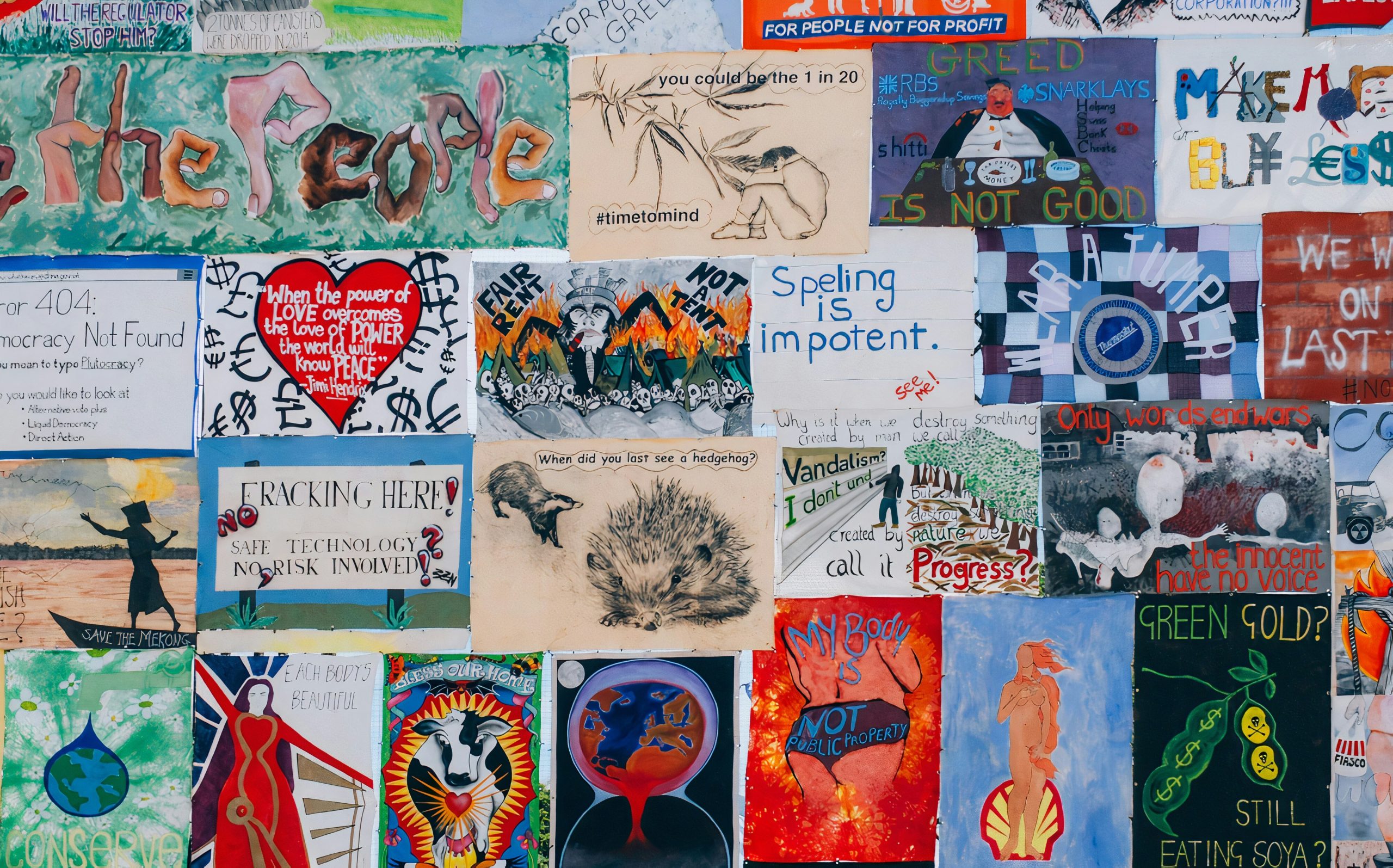
Part of Glasto’s secret sauce – the first element of its winning proposition – is the experience that it delivers. Yes, the big acts are consistently solid, but what sets it apart from other festivals is its amazingly wide range of niche, smaller artists and performers covering pretty much every genre imaginable. Seriously, there’s something for everyone, no matter how obscure your taste. We stumbled into the ‘Feminist Mouse Circus’ featuring a mischief of highly skilled taxidermy mice (alongside two skilled puppeteers, naturally). And how about the viral ‘Primary School Bangers’ singalong session of assembly hymns and other nostalgic fare. Our days were filled enjoying a dizzying array of activities: jewellery making, fitness classes, face painting, yarn spinning, sound baths, and that doesn’t even scratch the surface.
At Manifesto, we’ve worked with organisations trying to nail this ‘experience economy’ piece before, and tend to pull inspiration from brands that really understand how to engage their customers. Nike is always a good example. For a short time in April, they unveiled their immersive running-focused pop-up in London, ‘RunTown’. The concept store offered Nike’s latest performance innovations and exclusive services aimed at helping London’s runners gear up for race season: dedicated product trial zones, a race hub, panel talks with athletes, free physio sessions. They even had a custom poster-making station for race-day spectators.
L’Oréal are all over this kind of thing too. They’ve seamlessly blended in-store and digital offerings to create a more personalised beauty-buying experience. You can virtually try on makeup products in-store with augmented reality mirrors, and get a detailed skin consultation through a simple selfie using their online AI tool. The rhetoric is the same: brands are finding success in going beyond the functional purpose of their products; they’re inviting us into their world, letting us touch, feel – all in the hopes that we’ll come back for more.
Pre-TV broadcasting, Glastonbury’s growth was simple, organic – enthusiasm mainly spread via word-of-mouth. There’s a charm to the idea that when the festival first began in 1970, tickets were sold for £1 each, with a free bottle of local farmers milk thrown in for good measure! But everything changed in the mid-1990s. Channel 4 televised the festival for the first time across the UK and demand for those golden Glasto tickets subsequently soared. People everywhere got to see close-up shots of emotional fans lost in the music, wide angles of sea-like audiences swaying to the world’s favourite songs, and an intimate glimpse of the planet’s most famous performers – separated from the crowd by just a few metres of metal fencing. It was an unfiltered view of the biggest party on earth. And ever since the public caught a whiff, the age of Glasto FOMO (“fear of missing out”) had well and truly arrived. It’s the lure of the seemingly unattainable that we can’t help but be pulled in by, which brings us to the second element of the festival’s winning proposition: exclusivity.
Glastonbury has done well at capitalising on that FOMO feeling. Honestly, they could charge even more for tickets and Worthy Farm would still be filled to the brim (although don’t tell them that). Leveraging scarcity is a clever tactic and isn’t even really anything new. Private members clubs like SOHO House and The Birley’s Clubs have used competitive selectivity in their application process to entice audiences for years. Members are made to feel special, chosen, part of an inner circle – a privilege they’re willing to pay a hefty fee for.
It’s also a tactic by no means limited to the one-percenters. Streetwear brands such as Stüssy and Supreme started doing “drop days” a few years ago, which – for those unfamiliar with that particular fashion subset – involved the brands’ simplest “Box Logo” t-shirts, hoodies and other apparel selling out, quite literally, within milliseconds. Securing a £40 tee required the dexterity of a virtuoso, so as to key in a credit card number quickly enough to beat the throngs of fans all desperate to snag the latest must-have. It’s a masterclass in deploying exclusivity strategically, and a powerful psychological play to transform any product or experience into something even more compelling.
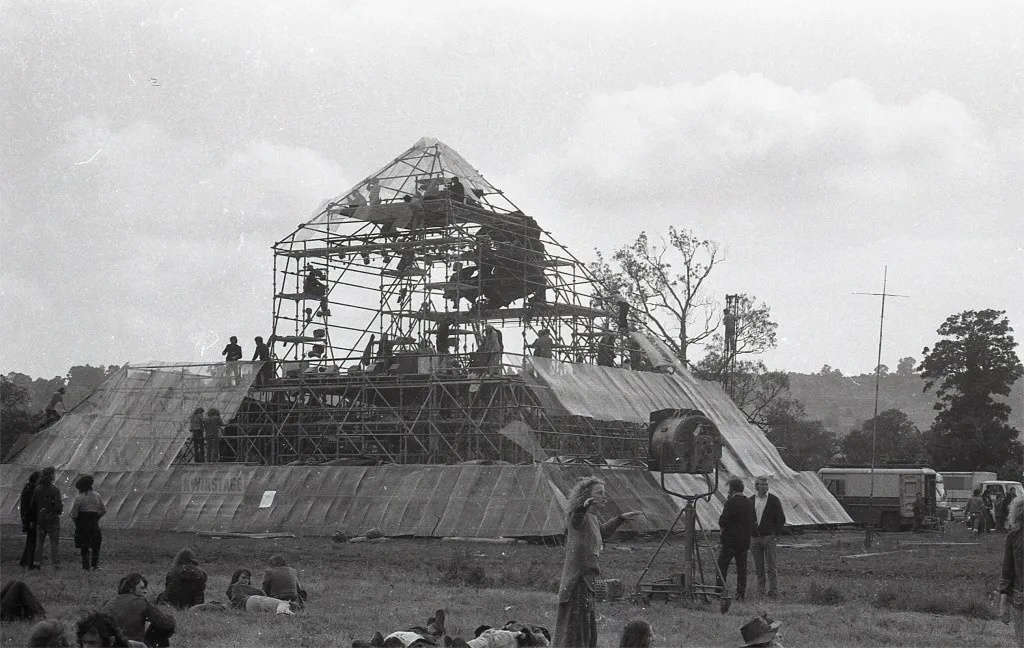
The third element of Glasto’s proposition is a little unconventional, and is all about its spiritual legacy. It surprised me to hear just how many people journey to that corner of the Somerset countryside specifically for the festival’s occultist roots and Celtic folklore. The belief that Glastonbury’s site is laced with old magic dates back to ancient times, a narrative that only deepened in the 19th and 20th centuries as archeological research coincided with a blossoming spiritualist movement. The abundance of sacred pagan and neolithic sites around the area is due to its position on the intersection of numerous ley lines, and makes it the perfect spot for an experience that dances between the real and the ethereal… pretty groovy if you ask me.
The festival plays into this lore with its various landmarks. It has its very own Stone Circle, Carhenge (a quirky replica of Britain’s most illustrious engineering feat) and the famous Pyramid Stage which, by design, seems to channel the supernatural energy of an ancient wonder. The spiritual symbolism that Glastonbury promotes is reminiscent of some advertising I saw a few years ago from one of my favourite Danish kombucha brands, Læsk. Niche, I know, but they produced a cracking campaign denoting pictures of their sacred kombucha cult, with witty taglines like ‘blessed be the booch’ and ‘holy scoby’ in reference to the slightly witch-like brewing process. It’s a simple technique, but referencing your origins can be a powerful tool in inviting customers into your brand history and unique legacy. If you have a quirky story to tell, tell it.
Glastonbury’s magic isn’t solely in its roots; it’s in the unparalleled atmosphere it cultivates. Whenever I mentioned my ticket before attending, people would chime in, recalling how memorable their time was, often emphasising the sheer enthusiasm radiating from everyone they met over the weekend. At the heart of the festival – the final ingredient in our proposition pie – is the profound sense of community that Glasto creates. It’s cheesy, but that feeling really hit me the moment the entrance stewards high-fived us on our way in. Worthy Farm becomes a bustling, densely packed city each year, and it’s that spirit of belonging that draws people back again and again, compost loos and all.
Manifesto’s own Hector Hales wrote a great piece recently on the power of loyal communities on business growth, referencing his experience attending the Puresport x Represent run club. Milwaukee-born motorcycling brand Harley-Davidson has found similar success in that realm. Harley owners are not just customers; they’re members of the family, heirs of the traditional American spirit and often ambassadors for the brand for life. Some customers even have tattoos of the Harley-Davidson logo on their bodies… now that’s what you call an emotional connection.
It’s an extreme example, but driving a sense of belonging, identity and purpose is precisely how brands forge the kind of unbreakable bonds that transcend mere transactions and turn customers into passionate lifelong advocates. Take me, for example. No tattoos, but I’ve become such a Glasto-head that I’m pretty sure my colleagues are sick of hearing me wax lyrical about it. Just let me show you one more video of the Kaiser Chiefs, please.

© 2026 Manifesto Growth Architects Manifesto Growth Limited, is a company registered in England and Wales with a registered office at 36-38 Hatton Garden, London, EC1N8EB.




 Find us on Instagram
 Follow us on LinkedIn